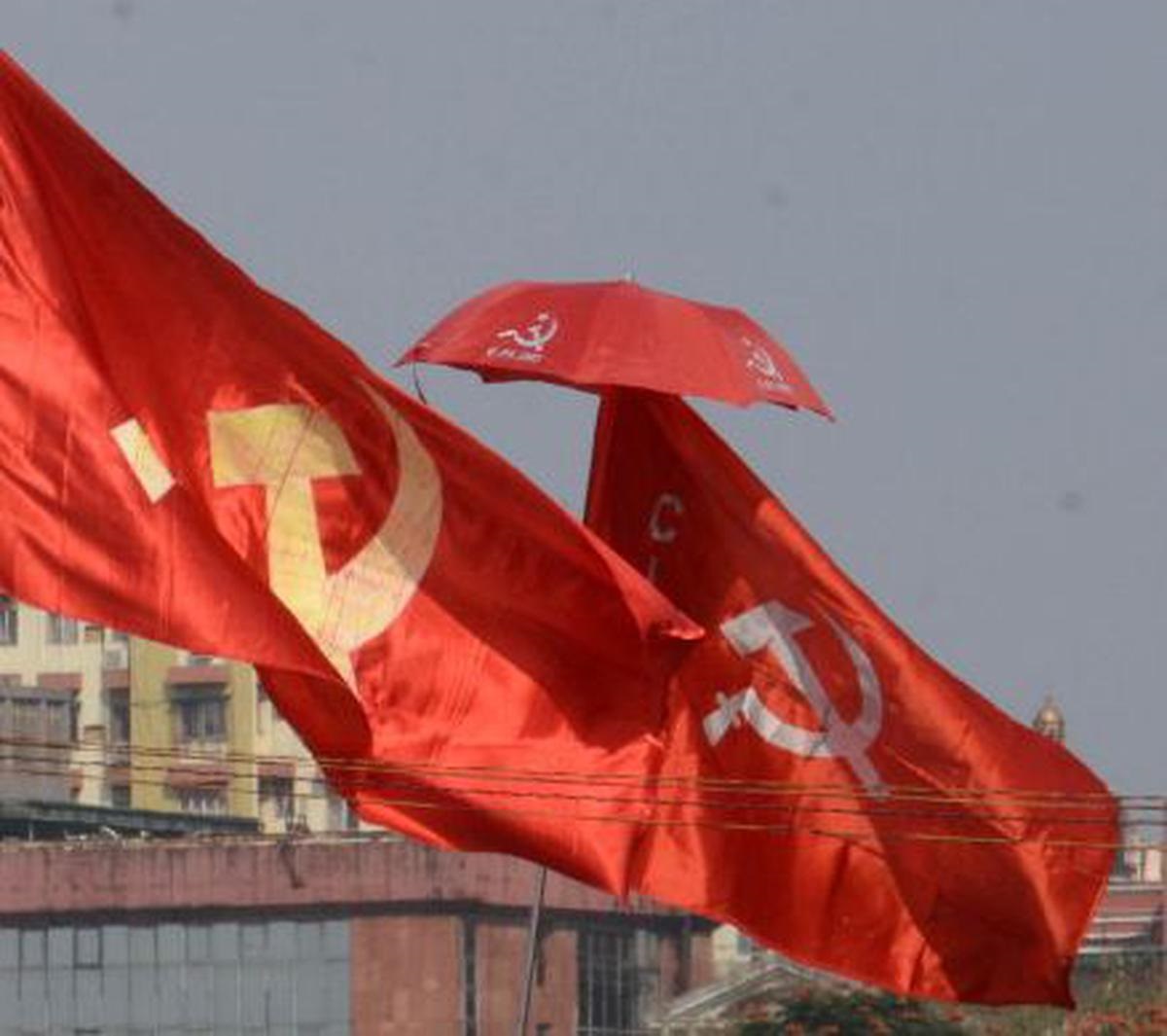
May Day, the International Workers' Day, is celebrated on May 1, to commemorate the working class struggle for an eight-hour workday, immortalised by the conflicts from the 1886 Haymarket affair in Chicago. It was established by an international federation in 1889, now recognised globally to promote worker solidarity and rights. On May 1, Chicago witnessed a great outpouring of workers, who laid down tools at the call of the organised labour movement of the city. It was the most effective demonstration of class solidarity yet experienced by the labour movement itself. The importance at that time of the demand – the 8-hour day – and the extent and character of the strike gave the movement significant political meaning. The blood bath at Haymarket Square, the railroading to the gallows of Parsons, Spies, Fischer and Engel, and the imprisonment of the other militant Chicago leaders, was the counterrevolutionary answer of the Chicago bosses. It was the signal for action to the bosses all over the country. The second half of 1886 was marked by a concentrated offensive of the employers, determined to regain the position lost during the strike movement of 1885-1886.
One year after the hanging of the Chicago labour leaders, the Federation, at its convention in St. Louis in 1888, voted to rejuvenate the movement for the 8-hour day. May 1, which was already a tradition, having served two years before as the concentration point of the powerful movement of the workers based upon a political class issue, was again chosen as the day upon which to re-inaugurate the struggle for the 8-hour day. It signalled the assertion of the class unity and solidarity which has evolved beyond US shores across the world as the most significant expression of the collective intervention of the working as a distinct class in shaping history.
Marx had famously observed “The history of all hitherto existing society is the history of class struggles.” The changing context of the working class and the internalisation of its lessons provide new opportunity to evaluate the experience and the tasks that lie ahead.
In every sense, May Day celebration and its international recognition has been the greatest validation of Marx’s contention. Marx’s concrete study of the nature of capital also lays out a road map for a conscious development in battling exploitation and towards social transformation. Marx’s prognosis clearly indicated the inherent tendency of capital towards concentration and centralisation.
However, capital’s trajectory is not autonomous and comes in conflict with labour. Labour’s response is conditioned by the growth of productive forces. Therefore, the labour movement must also contend with the continuous changes in the instruments of production which includes strides in technology. The ownership of capital is eternally engaged to exploit the advances in technology to extract a higher share of profit. Obviously, the working class has to react to this evolving trend to defeat that attempt This battle goes on through times.
The glorious saga of John Henry and his heroic hammer recorded the saga of the workers in the initial days of steam engine. The struggle continues right up to the present day of new artificial intelligence.
An excellent piece in The Jacobin – ‘Smartphone Society’ - a decade back, had chronicled the nimble-footedness of the workers’ movement in confronting the challenge of the application of smartphones in expanding the work hour. The German workers evolved a demand of shutting down their e-mail after sundown; subsequently that was accepted. This era of advanced technology has paved the way for astronomical growth of productive forces and the consequent engagement between capital and labour for facing the challenge of enhanced exploitation.
This phase of contemporary capitalism is characterised by unprecedented drive of finance capital leading to the very phenomena of international finance capital and the consequent neoliberal globalisation. Of course, this paradigm witnessed nation-specific versions of neoliberalism. But this phase has also led to extraordinary centralisation of capital and the spatial diffusion of productive activities. Resulting from this development, this contemporary reality also has given rise to great levels of migration both within and across countries.
The mobility of labour has started getting reflected in international politics. A shining testimony is the unprecedented solidarity for Palestinian people against the barbaric genocide by US-Israel axis. This solidarity has also shaken the conservative pro-Israel support in many European nations and camp followers of US imperialism.
In India, there is a major change in the political landscape which affects the working-class movement. The aggressive neoliberal policy and the corporate-communal nexus spearheaded by the Modi government, pursues aggressive communal polarisation, undermining of democracy and consolidation of authoritarian fascist rule. This is also characterised by a sharp acceleration of social and economic inequality, and burgeoning unemployment.
This threatens the very subsistence of the working-class. The characteristics of neo-fascist governance are expressed in the new labour codes which were fashioned last year but have come into enforcement from the new financial year. As part of the new features of the functioning of capital, the major restructuring of the labour, unorganised sector and informalisation has assumed rapid pace. The loss of real wage has pushed the workers’ backs to the wall. The backdrop of the May Day this time around is the growing phenomena of the outbreak of several spontaneous working-class actions in Haryana, Noida, Rajasthan, Udham Singh Nagar in Uttarakhand, Bhatinda in Punjab, and so on and so forth.
No doubt the observation of May Day this year will involve the study of the concrete specifics which has triggered this disquiet. It is the task of the working-class movement and the Party to weave these disparate actions into an integrated powerful movement for reversing the labour codes. Such working-class activism has to eventually take up the political task of facing the challenge of the neo-fascist aggression.
(April 29, 2026)


