Inderjit Singh
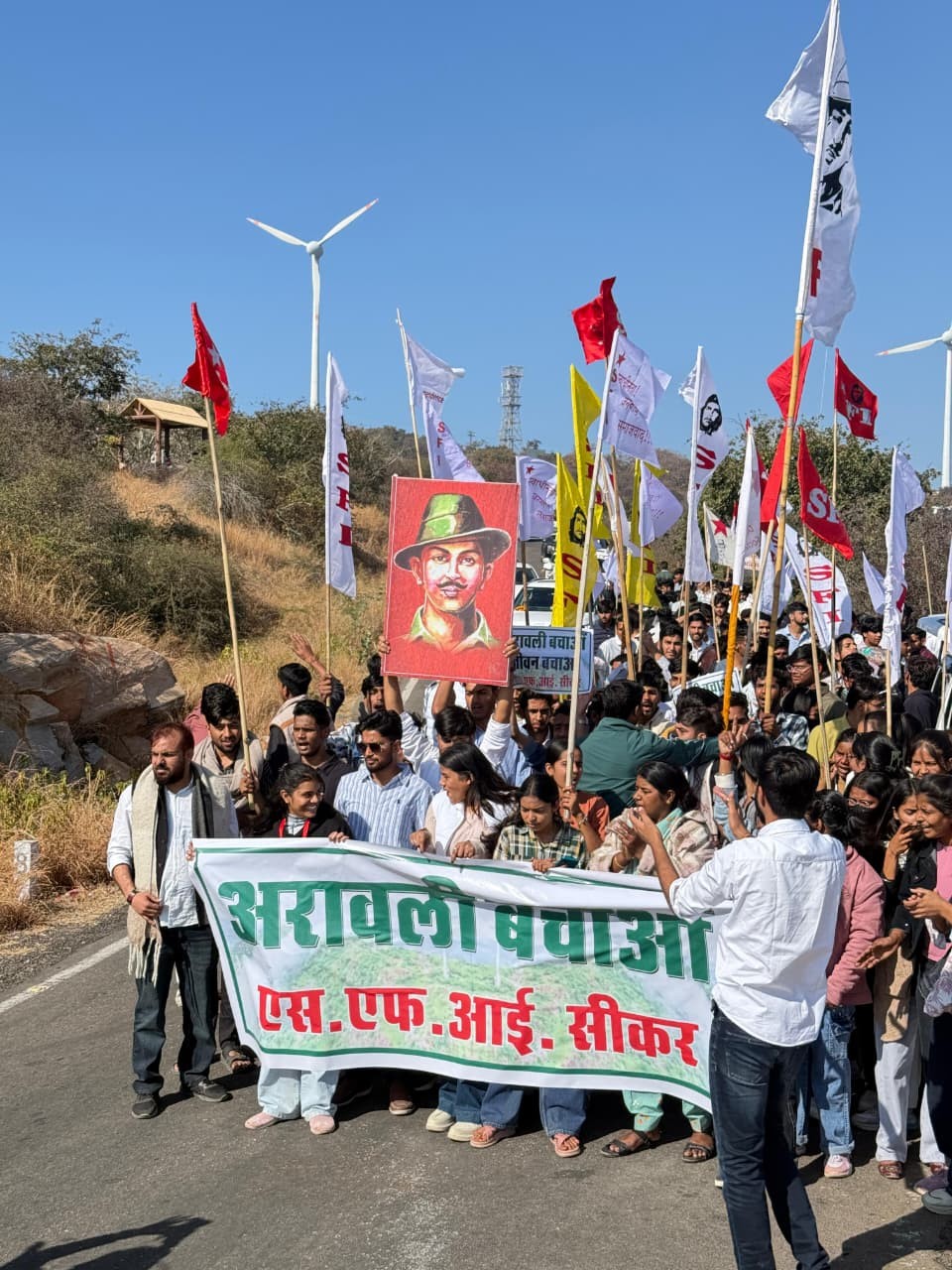
The Supreme Court (SC) has put in abeyance its own decision on the Aravalli range of November 20, 2025, in the wake of widespread anger expressed by farmers, women, rural labourers, tribals, environmentalist groups and other concerned citizens. Fire of contention in this case arose from the Supreme Court’s acceptance of a new definition submitted by the Ministry of Forest and Environment according to which, hills less than 100 metres from the relief will not qualify to be hills and thereby lose protection from the mining.
The public outcry was so intense that even the repeated public clarifications and desperate acrobatics towards damage control by the Union Minister Dhramendra Pradhan failed to convince the people. The Supreme Court had to take suo moto cognisance, list the matter for urgent hearing on December 29, and stay its decision along with constituting a fresh panel to study the key issues. While it is a welcome development, there is no scope for complacency, given that the Aravallis have been subjected to ruthless illegal mining even under the original definition. Therefore, persistence of fears in peoples’ minds are not without basis given the unbridled corporate greed to take over Aravallis and a government that serves the corporate interests.
Importance of Aravallis
It is necessary here to outline the economic, social, geographical, ecological and political dimensions of the Aravallis. One of the oldest mountain ranges in the world, dating back roughly 1.5–2.5 billion years, the Aravalli range is often described as the lifeline of north-western India. Stretching across 37 districts in Gujarat, Rajasthan, Haryana and the National Capital Region of Delhi, it is not merely a chain of hills but a vital ecological system that functions as a green lung, supporting rich biodiversity and sustaining human life over millennia.
Spread over nearly 1.44 lakh square kilometres, the Aravallis act as a natural barrier against desertification moving eastwards into Delhi, Uttar Pradesh and Haryana. By obstructing south-western winds and shaping monsoon patterns in this region, the range has played a crucial role in maintaining ecological balance. Without this barrier, the Thar desert would have advanced much further east, with serious consequences for agriculture, food security and human habitation. In an era of climate change, rising temperatures, heatwaves and dust storms, the destruction of the Aravallis threatens to exacerbate an already unfolding environmental crisis.
Successive governments and even the Supreme Court have often blamed farmers for Delhi’s worsening air quality due to stubble burning, which contributes only a small fraction to overall pollution, while turning a blind eye to extensive illegal mining in the Aravallis. Agriculture in several districts depends critically on the range for groundwater and aquifer recharge, apart from its role as a repository of minerals and medicinal plants. The sulphur hot springs at Sohna, located in the foothills of the Aravallis in Haryana, long known for skin treatment, are one among many such fragile ecological sites now under threat.
Let it be reminded to the present occupants of the North and South blocks, the ungrateful tenants of the Raisina Hill, that people will not be taking lying down the unpardonable act of handing over the 90 per cent of Aravallis to their greedy corporate masters. Let it be known that the entire National Capital New Delhi, Gurugram, Faridabad, etc. have been constructed from the material extracted by senseless mining of the same Aravallis that these cities are standing on.
Merciless Destruction
For the last many decades, the Aravallis had been inflicted heavy and merciless body blows by ruthless mining and tree felling by the organised mafia lobbies patronised by the powers that be. The amended definition naturally sent shock waves across the country especially among the people of the Aravalli range where several voluntary organisations had been active since decades to save the range and mobilising the local people whose very lives and livelihoods essentially draw sustenance from the hills since times immemorial. What is unfolding in the Aravallis, however, extends well beyond mining alone. Corporate interest in the region now encompasses real estate development, with attempts to open up large tracts for multi-storeyed housing, luxury farmhouses and resorts in the rapidly expanding periphery of the National Capital Region.
Ironically, the lifeline is crying today for its own survival. The signals of SOS reverberating from the hill tops, the foothills and the invisible depths, are not heard by those in power. Actually, illegal mining had been going on for many decades. Initially, local people used to operate small pits to extract stones at small scale and sell to the stone crushers. Over time, however, large contractors and corporations, in collusion with corrupt officials and the ruling establishment, introduced heavy machinery like bulldozers and earthmovers, and expanded mining operations on a massive scale, including beneath the foothills, in blatant violation of all norms. Local communities resisted this monopolisation of mining, but their protests were ignored.
Nowadays, high explosive devices are drilled deep into the heart of hills and explosions are conducted by remote control. The high decibel thunder give rise to earthquake like tremors through the surrounding villages causing wide cracks in houses and other buildings. Recently, villagers of Usmapur and some other adjoining villages in Mahendergarh district of South Haryana, convened a panchayat on December 28, last year and resolved to demand a complete halt to mining in their area. Similarly, some villages of Charkhi Dadri district of Haryana had to hold a dharna for several months to get the deep underground mining by a company stopped as the drained-out water was damaging the crops of farmers.
Curse of Capitalism
Even if the amended definition is stalled by the Supreme Court, the larger concern of protection of Aravallis and degradation of soil still remains unaddressed. In February 2025, Parliament was informed that according to the Desertification and Land Atlas of India 2021, deserts are spreading rapidly. More than 3.64 Lakh hectares in Haryana, 1.68 Lakh in Punjab and 1.54 Lakh hectares in UP are already affected by land degradation and desertification. This process will inevitably accentuate if Aravalli are allowed to be exploited for the corporate super profits.
Marx and Engels viewed capitalism as inherently destructive to nature; driven by its relentless pursuit of profit, it disrupts natural cycles (the "metabolic rift") through soil robbery, deforestation, and pollution, alienating humanity from the natural world by treating resources as mere commodities. They saw this exploitation of land and labour as central to capitalist contradictions, leading to ecological crises like soil depletion and urban pollution, as shown in Engels' observations about the industrial town of Wuppertal and Marx's analysis of agriculture. They argued for a rational, planned approach to restore balance under socialism.


