Bangladesh Wins, Fundamentalism Loses
Santanu Dey
The long wait is over. After eighteen months of mass uprising, elections have finally been held in Bangladesh. The people have delivered a decisive verdict. By resisting fundamentalism, they have secured a victory of relief.
The BNP (Bangladesh Nationalist Party) alliance has won more than two-thirds of the seats. Out of the 300-member parliament, they secured 212 seats. BNP alone won 209, received 49.97 per cent of the total votes— its largest victory in history. The second-largest party is Jamaat, which opposed the Liberation War of 1971 and represents hardline fundamentalist forces. Jamaat’s 11-party alliance won 77 seats, with Jamaat itself securing 68 — the highest in its history. Their previous best was 18 seats in 1991. Jamaat secured 31.76 per cent of the total votes— its best result in history (previous best was 1991, 12.2 per cent). The National Citizen Party (NCP), formed by student leaders of the uprising, was rejected by the people. NCP secured only 3.05 per cent of the votes. Contesting 30 seats, they won only 6. Independents won 7 seats, all of them disgruntled BNP candidates. The Islamic Movement won 1 seat. One constituency did not hold elections due to a candidate’s death, and results for two seats (Chattogram-2 and Chattogram-4) are still pending. The Communist Party-led seven-party democratic alliance did not perform as expected, but played an important role in shaping the narrative against fundamentalism. The Workers’ Party of Bangladesh boycotted the election but later issued a statement saying: despite conspiracies and obstacles, the people reflected their desire for peace and a healthy democratic process. They congratulated BNP on its victory.
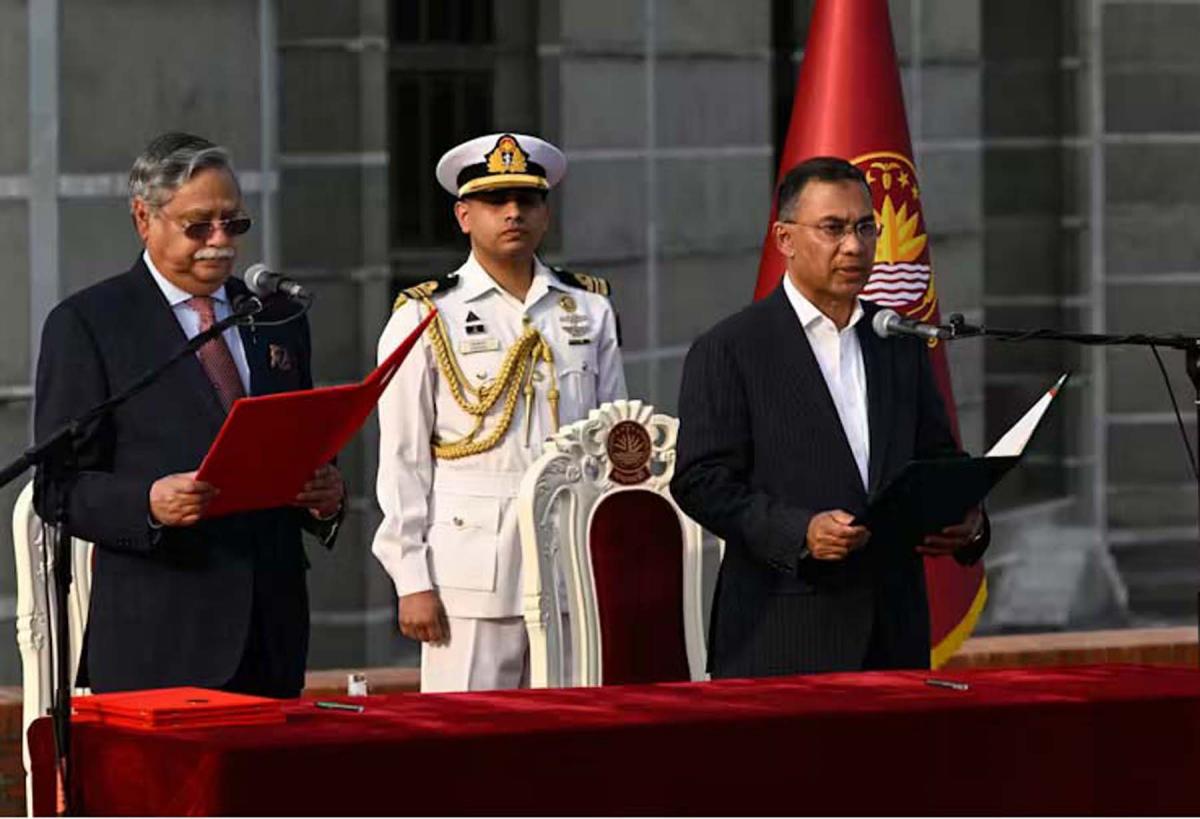
Alongside, a constitutional referendum was held, where the ‘Yes’ vote won. Though this raises concerns, since much depends on the ruling party, the Liberation War spirit is unlikely to be completely discarded. Jamaat leaders, however, have already raised their voices against it.
This time, representation of women and religious/ethnic minorities is the lowest in two decades. Only 7 women candidates were directly elected, compared to 19 in 2024, 22 in 2018, and 18 in 2014. Of the 7, six were BNP candidates. The other was also BNP, but expelled just before the election. Only 84 women contested, 4.08 per cent of total candidates. This is not a good sign for democracy. Religious/ethnic minorities won only 4 seats, all BNP candidates.
During the interim government of the past 18 months, Bangladesh plunged into chaos. Law and order collapsed. Under the banner of ‘Tawhidi Janata,’ mob violence spread. Reckless killings and torture became rampant. The country burned daily in the fire of hatred. Extremist religious violence created one incident after another. Anti-India rhetoric escalated. Sufi saints were attacked, shrines vandalized, Bauls persecuted. Rabindranath, Nazrul, and Lalon’s legacies were burned in rage. Minorities were assaulted, journalists and media houses attacked. Newspapers like Prothom Alo and Daily Star were torched. Cultural institutions like Chhayanaut and Udichi were not spared. Attempts were made to erase the spirit of the Liberation War, its history, and Bengali language-based culture. Even demands arose to replace Rabindranath Tagore’s national anthem Amar Sonar Bangla. The goal was to turn Bangladesh into an Islamic state— a ‘Bengali Pakistan.’
For the first time, Jamaat thought they would come to power. The election became a referendum: Jamaat or not Jamaat— returning Bangladesh to pre-1971, or preserving the Liberation War spirit.
BNP’s victory brought relief. Bangladesh proved once again that its people can be religious without being fanatical. They stood against Jamaat’s narrative. They refused to become another Afghanistan or Pakistan. The most important outcome of this election is not just which party won, but that extremist communal forces failed to seize power. Under Jamaat’s shadow, NCP too was rejected by secular Bangladeshis.
Yet, underestimating Jamaat would be a mistake. Jamaat-led alliance won more than one-fourth seats. They now have 77 MPs. In Dhaka’s 15 constituencies, Jamaat won 6. An NCP leader from the July Movement won 1. They narrowly lost 5. Jamaat is now in parliament. Its leaders are free and active. Recently, their student wing Islami Chhatra Shibir won big in student union elections at Jagannath University, after victories in Dhaka, Jahangirnagar, Chittagong, and Rajshahi universities. Jamaat claims support from 20 million people, including 250,000 full-time cadres, called Rukon (‘pillars’).
This election has opened a democratic space. A new journey begins. A new political moment faces Bangladesh. True, Awami League could not contest. But the people’s mandate is clear: a stable democratic government. The democratic transition that began through this election must continue and strengthen. Daily Star headlined: ‘A new Bangladesh demands new directions’.
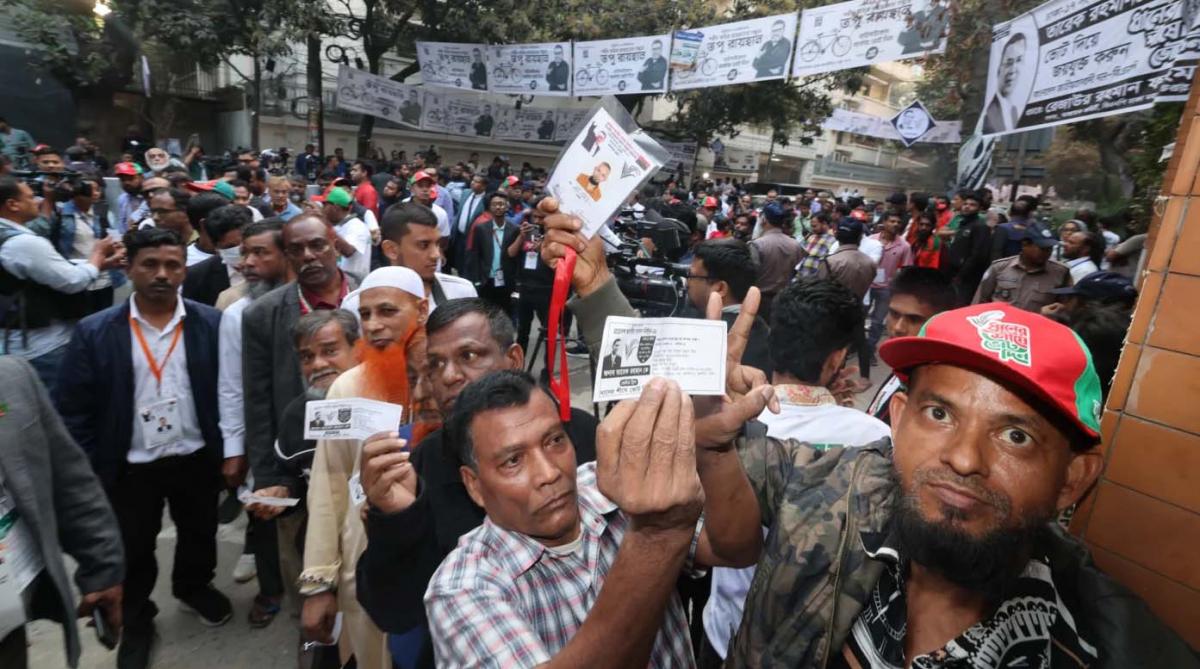
Bangladesh cannot go backward. It has experienced democratic transitions before, but failed to sustain democratic practices, leading to crises. The 2024 uprising has once again created an opportunity. This election is not just a transfer of power— it is a test of rebuilding democratic foundations.
According to the Election Commission, voter turnout was 59.44 per cent, compared to only 42.04 per cent in 2024. Still, nearly 40 per cent did not vote. So the mandate is not fully representative. Yet, those who voted got to empower their chosen political force. This is a form of democratic approval. But the aspirations of those who stayed away must also be addressed. Their participation would have strengthened democracy. Bringing them back into the democratic process is a major challenge for Prime Minister Tarique Rahman.
Past experience shows that holding peaceful elections is not enough. Post-election peace and order are also critical. Fair elections are needed at local levels— union councils, upazilas, districts. Farmers are struggling. Poverty and unemployment are rising. Prices are beyond reach. People want corruption-free, politically neutral policing.
People want stability instead of chaos. Participatory democracy. An inclusive approach— across society and economy. A firm stance against communal forces. A return to peace and harmony. An end to arrests, false cases, and persecution of opponents. Release of intellectuals, artists, writers, journalists. Stronger ties with India.
This decisive mandate carries immense responsibility. At this turning point, whether Bangladesh moves toward democratic transformation— or squanders another historic opportunity— depends on BNP, Prime Minister Tarique Rahman, the government, and the secular people of Bangladesh.


