Abass Rather
INTERNATIONAL Labour Day, popularly known as May Day, is observed across the world on May 1. It serves as a powerful reminder of the struggles and sacrifices of the working class, particularly the workers of Chicago who laid down their lives in 1886 while fighting for their rights and a dignified future. In Jammu and Kashmir, this legacy of resistance finds a poignant reflection in the history of the shawl weavers. On April 29, 1865, hundreds of shawl weavers marched towards the residence of the Raj Beg (tax superintendent) at Zaldagar to protest against oppressive taxation and rampant corruption. They were subjected to unbearable burdens, exorbitant taxes, bonded labour, and the exploitative system of nazrana, which had reduced their lives to misery.
The protest was met with brutal force. At least 28 workers lost their lives due to gunfire or drowning, and many more were injured in what came to be known as the Zaldagar Massacre. The leaders of the movement, including Sheikh Rasool and Abli Baba, were arrested and later died in the dungeons of Bahu Fort in Jammu. Despite the shawl industry being the backbone of the Kashmiri economy, the weavers lived in abject poverty under the oppressive Dag-shawl (Department of Shawls) system. Their struggle remains a stark reminder of the enduring fight against exploitation and injustice, and continues to inspire the working class movement to this day.
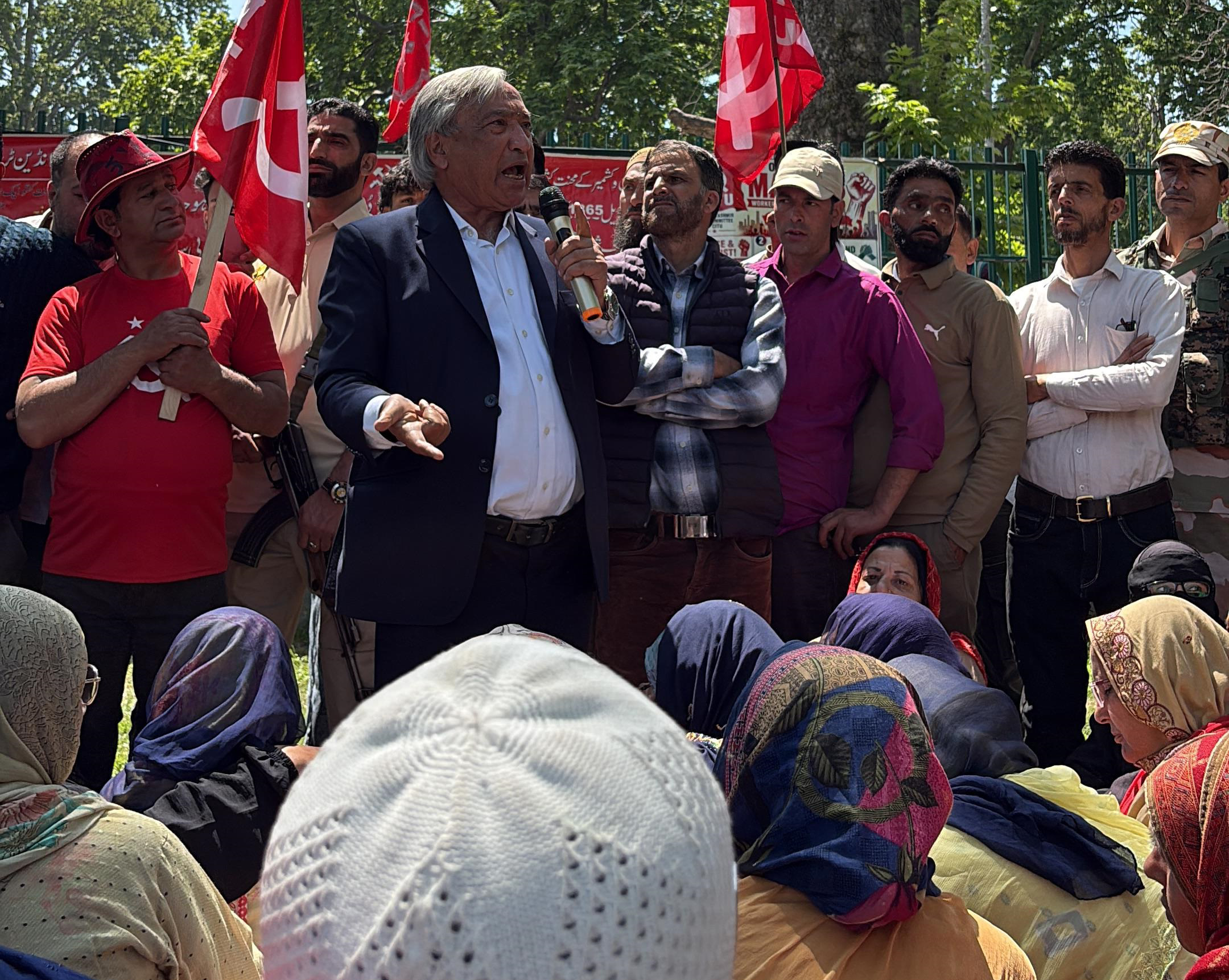
At Polo Ground, Srinagar, hundreds of workers and kisans assembled under the banners of CITU and the Jammu & Kashmir Apple Farmers’ Federation, raising slogans with red flags in their hands to commemorate the sacrifices of the Chicago Martyrs and the Zaldagar Martyrs.
Addressing the gathering, President, CITU J&K, and MLA, Kulgam, Mohammad Yousuf Tarigami described the day as a powerful reminder of the sacrifices made by workers across the globe who fought against exploitation, oppression and inhuman working conditions. The Zaldagar Martyrs remind us that Kashmiri shawl workers sacrificed their lives much before the Chicago Massacre for the working class and this legacy needs to be not only remembered but be given its due place. “Workers once toiled for 17 to 18 hours a day under extremely harsh conditions. The rights we speak of today, whether it is regulated working hours, fair wages or basic protections, were not handed over benevolently; they were achieved through relentless struggle, unity and sacrifice,” he said.
Emphasising the continued relevance of these struggles, Tarigami cautioned that the gains secured over decades are facing renewed threats amid rising economic inequalities, informalisation of labour and weakening of protective mechanisms. He stressed that the working class must remain organised, aware and vigilant. “No one listens unless people raise their voice. Change comes only when workers stand together, assert their rights and demand accountability,” he added, calling for stronger collective action to safeguard the interests of labourers.
He further noted that May Day is not merely a commemoration of past struggles but a call to action and urging workers and society at large to recommit to the ideals of social justice, dignity of labour, equitable distribution of wealth and inclusive development. He vehemently opposed the anti-working class policies pursued by the BJP-led Government and appealed for revocation of the four labour codes implemented recently which are detrimental to the interests of the labour force.
The speakers highlighted the significance of the day and drew attention to the pressing challenges faced by the working class and the farming community.
Zahoor Ahmad Rather, President of the Jammu & Kashmir Apple Farmers’ Federation, in his address, underscored the grave issues confronting apple growers. He spoke about the adverse impact of the Indo–US trade deal and the India–New Zealand agreement on the local apple economy. He noted that farmers are already reeling under the burden of flawed government policies, and the lack of adequate Controlled Atmosphere (CA) storage facilities is forcing them to sell their produce at meagre prices. Unfavourable climatic conditions have further compounded their distress, while meaningful support from the government remains absent. On the occasion, he strongly demanded the implementation of Minimum Support Price (MSP), crop insurance, and effective market intervention schemes for farmers.
Ab Rashid, a CITU leader, in his speech, criticised the four labour codes, stating that they are anti-worker and pro-corporate in nature. Among others who addressed the gathering were Abdul Rashid Najjar, JKCCTU, Abdul Rashid Pandit, President, Kashmir Constructional Workers Union, Mohd. Ramzan, President, Srinagar Municipality Workers Union, Mohd. Afzal Parrey, Mohd. Yaqoob Ganie, Mohd. Abass Rather, Dilshada, President, Asha Workers Union Kashmir, Lateefa and Suraya, Anganwadi leaders, Fayaz Ahmad, Horticulture Employees Union, and Hilal Ahamd, Transport Workers Union. Masooda Majid, leader od the Anganwari Workers Union, presented a revolutionary song imbibing enthusiasm among the gathering. Abdul Gani Bhat, senior trade union leader, managed the stage.
In the Jammu region, the day was commemorated across almost all districts viz Jammu, Reasi, Kathua, Udhampur, Pooncha, Samaba and Kishtwar, where unions affiliated with CITU highlighted the anti-worker and pro-corporate policies of the current Modi dispensation. Addressing the gathering, CITU general Secretary Comrade Jagdish Sharma highlighted the persistent hardships faced by workers, including job insecurity, inadequate wages, lack of social protection and increasing concentration of wealth in a few hands.
In the Chenab Valley, workers’ unions affiliated with CITU, representing major hydroelectric projects—including Pakal Dul Hydroelectric Project (1,000 MW), Ratle Hydroelectric Project (850 MW), Kiru Hydroelectric Project (624 MW), Kwar Hydroelectric Project (540 MW), and Dulhasti Stage II Kishtwar—assembled in Kishtwar. Addressing the gathering, Muzafer Ahmad, Vice President of CITU Jammu and Kashmir, emphasised that in the present socio-economic context, unity among workers, across sectors and encompassing both organised and unorganised sections, has become more crucial than ever.
The participants at both divisions, Kashmir and Jammu, reiterated that the legacy of the Chicago martyrs continues to inspire workers’ movements across the world and simultaneously the legacy of the Zaldagar Martyrs continues to inspire workers of Kashmir. They resolved to carry forward their struggle with renewed determination, unity and collective strength.


