Vikram Singh
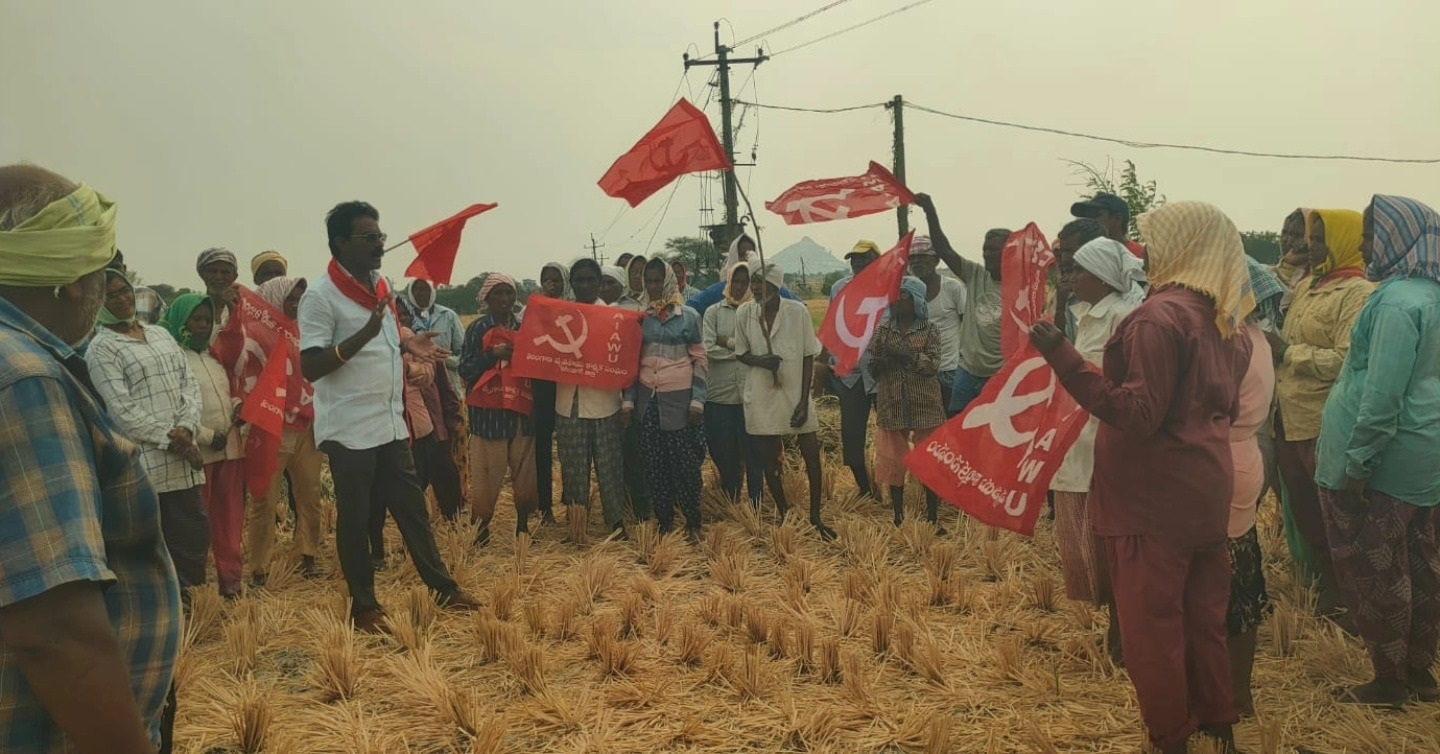
ON May 15, 2026, all of rural India echoed with the voices of agricultural and rural workers demanding reinstatement of MGNREGA and roll back of VB-GRAM (G). Tens of lakhs of workers participated in the strike called by the joint platform of agricultural and rural workers’ unions and the NREGA Sangharsh Morcha. In thousands of villages, MGNREGA workers along with many agricultural and rural workers gathered together outside gram panchayats protesting and demonstrating and submitting a memorandum of their demands to the Panchayat Presidents.
The strike was quite impactful in West Bengal, Telangana, Tamil Nadu, Karnataka, Haryana, Punjab, Rajasthan, and Uttar Pradesh where lakhs of agricultural and rural workers participated through different forms of protests and demonstrations outside local government and panchayat offices. Telangana is one of the states where MGNREGA is implemented through the continuous struggles of workers and there was an organised effort to resist this onslaught by the rural workers, which was reflected in the large-scale mobilisations on the day of the strike in all villages. In West Bengal, despite the elections and widespread violence following them, the workers’ spirits weren’t contained and they took to the streets, striking and sloganeering, to register their demands. In Tamil Nadu, the protest actions were implemented in almost all rural districts with massive gatherings outside some village panchayats. Similarly, in Karnataka, the strike actions occurred throughout the state with noteworthy mobilisation in some districts. The strike call was also effectively observed in Tripura with overwhelming participation of rural workers.
The most striking feature of this action was the overwhelming participation of the agricultural and rural workers from the northern states. These are the places where the anger and resentment of the workers is usually seen to be subdued due to the deep divisions based on communal and caste lines created by the right-wing Hindutva politics. In spite of that, the agricultural and rural workers in these states hit the streets to participate in the MGNREGA workers’ strike. It is also the reality that MGNREGA is poorly implemented in these states with no proper attention to ensuring the employment guarantee. The workers are usually discouraged from demanding work under the scheme and even those who work are looked down upon by the others. Finally, most of these states are ruled by BJP-led state governments except Punjab and Jharkhand.
The state infamous for its undemocratic political environment created by the bulldozer model of governance employed by CM Ajay Bisht, Uttar Pradesh, witnessed a successful strike of MGNREGA workers in 28 districts, 67 blocks, and 209 panchayats as per the initial reports. In Haryana, there was a continuous campaign by the activists of agricultural and rural workers’ unions in different districts which resulted in a highly coordinated strike with massive participation. The strike was conducted in over 150 village panchayats in over 8 districts. In all the rural districts of Punjab, workers gathered to make the strike a success in the state. In Rajasthan as well, there were sporadic actions throughout the state but in some districts like Ganganagar, Hanumangarh, Sikar, and Bikaner the protest actions were massive with thousands participating. Protest actions were also held in some places in Madhya Pradesh, Jharkhand, and Assam. Kerala, Andhra Pradesh, and Bihar will be organising similar actions on May 20 as part of the pre-decided schedule for the MGNREGA workers strike called at the all-India level.
The success of the strike and the wider participation was a result of a long campaign by the agricultural and rural workers’ unions and other organisations amongst the rural masses exposing the fake narratives of the ruling dispensation. It is important to note that after the passing of the VB-GRAM (G) act the BJP-led central government and state governments had undertaken an intensive campaign to create an environment in favour of this act. Even MPs and MLAs were among people peddling propaganda in favour of this act. The whole of the government machinery was used to create an illusion that the VB-GRAM(G), which is a death order signed to kill the employment guarantee scheme in rural India, is beneficial for the workers.
The massive participation was also a result of the personal experiences and the anger of the workers felt in the last three months when there was almost no work available under MGNREGA. Despite resistance and opposition from all sections of rural workers and their unions, the central government is adamant on implementing VB-GRAM (G) and has notified the date of implementation as July 1. There are no rules yet framed for its implementation but the discussion in the ministry suggests that the existing job cards will remain valid temporarily for workers whose E-KYC has been completed until ‘Gramin Rozgar Guarantee cards’ under the new act are issued. This situation is already affecting the work and availability of work in the villages.
An important point to note is that, for the first time, the central government has clearly stated the division of funding between the Centre and the states. The PIB statement of Ministry of Rural Development on 11 May reads, “Including the likely contribution of the States, the total programme outlay is estimated to exceed Rs 1.51 lakh crore.” This means that although the Centre decided the allocation in the Union Budget without consulting the states, it now expects them to contribute around 40 percent of the total expenditure in proportion to the Centre’s share. This goes against the spirit of federalism and reflects increasing centralisation of power. The Centre has ignored the reality that many states do not have the financial strength to contribute such a large share. State governments are already under severe financial pressure, partly due to the economic policies of the central government. While the Centre continues to promote corporate-friendly policies and provide concessions to big businesses, it is shifting the burden of funding social security schemes onto the states. This funding condition may itself become a major obstacle in implementing VB-GRAM (G). Many states may struggle to allocate their required share of funds, which could delay or weaken implementation of the scheme. In practice, this may result in promises remaining only on paper. Instead of strengthening rural employment and welfare, the illusionary Rs 1.51 lakh crore figure is another attempt to mislead people.
With weaker financial support from the Centre, state governments are likely to become more hesitant in providing work to everyone who demands employment. This trend is already visible in states like Andhra Pradesh and Telangana, where MNREGA implementation has weakened. According to the latest MGNREGA tracker by LibTech India, Andhra Pradesh recorded a major decline in employment during the past year. Total person-days of work fell by 23.2 per cent, dropping from 2,422.84 lakh to 1,859.77 lakh. The decline affected almost every area of the programme. The number of registered households decreased by 6.1 per cent, households getting work dropped by 8.6 per cent, and the number of workers employed declined by 10.1 per cent. At the same time, the average number of workdays per household fell by 16 per cent. The sharpest fall was seen in households completing the full 100 days of employment. Their number declined by 57.6 per cent, from 5.1 lakh to only 2.16 lakh, reducing their share from 10.9 per cent to just 5 per cent. A similar trend can be seen across the country. The LibTech India Report for 2025–26 show that households employed under MGNREGA fell by 8.2 per cent, while workers employed declined by 9.1 per cent. Total person-days of work also dropped sharply from 268.44 crore in 2024–25 to 210.73 crore in 2025–26, reducing average employment available to workers.
Use of technology like facial recognition and direct bank transfers has led to more deletion of job cards and eligible workers instead of fixing the problems of corruption. The new Act also makes similar technologies compulsory, which goes against the ground realities of India. Under VB-GRAM (G), attendance at worksites will be recorded through a face authentication-based system. The exclusionary technology introduced by the BJP-led central government has led to not just exclusion of workers from work or taking away their livelihoods but taking away their lives itself. In the Amravati district of Andhra Pradesh, five women MGNREG workers were killed on the spot when a speeding truck on the road ran over them. These five workers had reached the MGNREG worksite and were trying to register their attendance through the NMMS app. Due to a lack of internet at the worksite, they were forced to stand on the roadside to mark their attendance in the app. At this moment, when they were anxiously waiting to register themselves on the portal in order to earn their abysmally low daily wage, a truck ran them over. This attendance system is a bundle of flawed technology that troubles the workers seeking work and excludes many from getting any work. The government has imposed a technology without building the appropriate infrastructure around it.
While the BJP-led central Government is least concerned about the situation of rural India and is working in the interest of corporates, the situation of agricultural and rural workers is severely deteriorating. According to the latest National Crime Records Bureau (NCRB) report released in May 2026, 10,546 people in the farming sector, comprising 4,633 farmers/cultivators and 5,913 agricultural labourers, died by suicide in 2024. This shows the grim reality of agricultural and rural workers and small peasants and repealing MGNREGA will lead to a worsening in these figures.
The BJP-led central government thought that it had successfully accomplished its mission of taking away the guarantee of work from agricultural and rural workers, but this whole facade done by the BJP was clearly understood by the workers, which led to this strike of MGNREGA workers. This strike is just a warning to the BJP-led central government. By conducting this strike in their respective villages, the agricultural and rural workers across the country have kept forward their demands and have tried to convey them to the central government through the elected representatives nearest to them. The demands are as follow:
1. Roll back of VB GRAM (G) and reinstating a strengthened form of MGNREGA.
2. This strengthened form must provide at least 200 days of work to every household with a minimum wage of Rs 700 which should yearly adjust as per market inflation.
3. Roll back of the exclusionary technology for payments and attendance systems (recent addition being facial recognition for attendance leading to mass scale exclusions)
4. Empowering the Gram Sabhas to be a major stakeholder in MGNREGA works and its implementation throughout the villages.
If these demands are not met by the central government or if no positive development takes place in this direction then the agricultural and rural workers across the country will resolve to move forward more militantly demanding their right to employment guarantee in rural India. The unity of agricultural and rural workers will defeat the BJP’s attempt at destroying the livelihoods of the rural workers in order to enslave them as cheap labour for the landed classes and the rural rich.


