Comrade Sonya Gill: A Life Dedicated to the Struggle for Equality and Justice
Mariam Dhawale
The sudden and shocking demise of Comrade Sonya Gill on August 25, 2026 at the age of 71 is an immense loss to the women’s movement and the Left movement in Mumbai and Maharashtra. It is a big blow to all those who loved and respected her as a comrade and friend.
Sonya Gill was a member of the CPI(M) Maharashtra state committee and the Mumbai district secretariat since long, a member of the AIDWA central executive committee for nearly two decades, the Maharashtra state general secretary of AIDWA for three terms from 2010 to 2019, and state vice president later. Along with her husband, the renowned journalist P Sainath, she was the co-founder and trustee of the People’s Archive of Rural India (PARI).
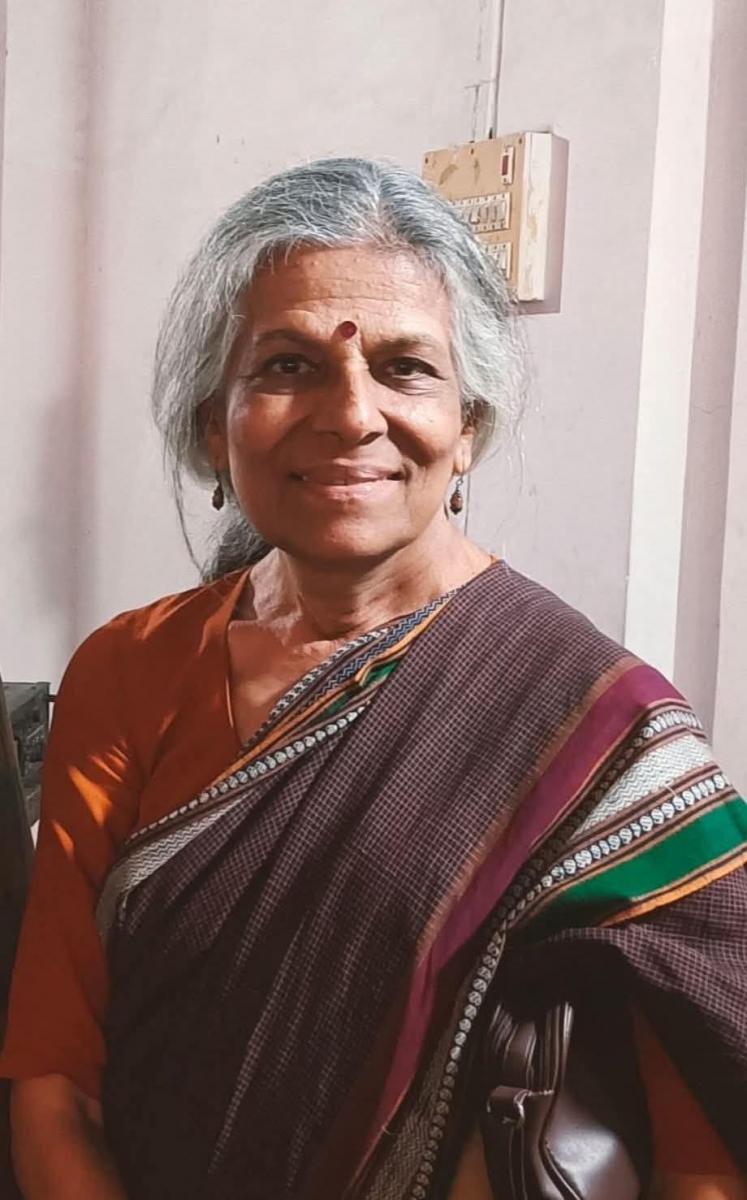
Sonya hailed from a Punjabi Sikh family. Her father was an Army officer and mother a home-maker. Sonya was born on September 27, 1955, and studied at the Mater Dei School in Delhi where she excelled in academics, and was also adjudged the best all-rounder. She graduated from the S P College in Pune. From 1976 to 1980, she did her MA and MPhil in Sociology at the JNU in Delhi. She won A grades in both. It is in JNU that she was exposed to Left ideology. She then taught Sociology at the Sophia College in Mumbai for a year in 1981-82, and then worked at the Foundation for Research in Community Health (FRCH). Health was always one of the important subjects of her interest and study.
Sonya joined the AIDWA and became active in the women’s movement in 1989. She began her work among women in central Mumbai's working-class areas in Worli BDD Chawls, Jijamata Nagar, and Delisle Road, under the guidance of Ahilya Rangnekar and Prabha Sawant. She was elected President of the AIDWA Mumbai District Committee in 1994. In this capacity, she paid meticulous attention to building up local units of AIDWA across the city. She also made special efforts in building joint activities with other secular, democratic and progressive women’s organisations in Mumbai. She remained a pillar of the Mumbai AIDWA till the end.
She was later elected to the AIDWA Maharashtra State Committee, then its State Secretariat, and then as State General Secretary in 2010. She ably carried out this responsibility for three terms till 2019. She moved widely in several districts and helped to strengthen the organisation. She was elected to the AIDWA Central Executive Committee (CEC) from 2007 up to 2023. Her contribution to the discussions on reproductive health, population policies and other health-related issues was very valuable. It helped AIDWA in formulating its positions on health issues at the national level. Sonya represented AIDWA in the Jan Swasthya Abhiyaan (JSA) and played an important role in bringing out the gender perspectives in its campaigns.
Sonya joined the CPI(M) in 1990; was elected to the CPI(M) Mumbai district committee in 1997, to the district secretariat in 2005, and to the Maharashtra state committee in 2012.
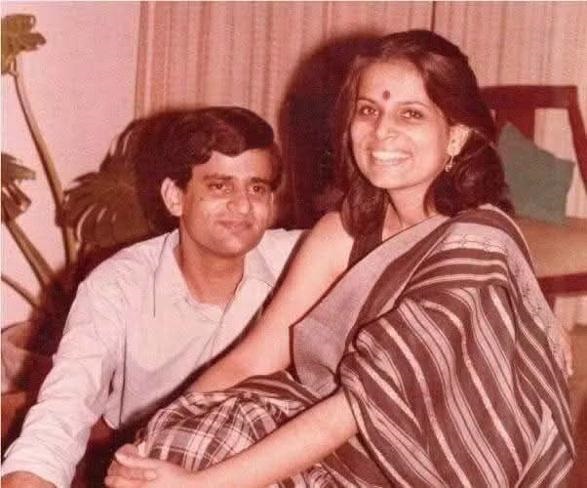
Sonya married P Sainath on March 29, 1986. They met when they were studying in the JNU. Their extraordinarily strong four-decade long personal and political partnership came to an abrupt end with their evening walk together on August 25, when Sonya suddenly collapsed. None of us have ever seen Sainath so shattered as we did at Sonya’s funeral. Her contribution to PARI was immense, and it deserves a separate account of its own.
Sonya battled her serious illness for the last few years with magnificent courage. Words can never describe what she and Sainath went through in that period. But through it all, her commitment, her grace, and her radiant smile never left her even once. Not a word was ever heard from her about her pain or her difficulties. P Sainath says, “That was true even at home. In 40 years, I never heard her complain even once about her health, her pain, or narrate her unhappiness with it. She was extremely positive each time - after major surgeries, she'd be back at work, first online, then in office.” She continued to participate in the activities of AIDWA and CPI(M) till the end, right up to the nationwide Jail Bharo struggle in Mumbai on August 10, 2026. All this was courage and fortitude of the very highest order.
Sonya and I worked together in AIDWA for 32 years since 1994 when I joined the women’s movement after being relieved from the SFI. We worked closely together at all levels, and for one term as President and General Secretary of the Maharashtra AIDWA. It was a joy to work with her. It was inspiring to see her grit when facing the police during protests. It was so exciting when we travelled ticketless from Mumbai to Delhi with hundreds of women for the All India rallies. Songs, slogans and laughter reverberated in the train. Sonya easily melted into the bevy of women in the train, and became part of a collective strength.
Remarkable Comrade
Sonya was a grassroots organiser in the truest sense of the term. Her politics was rooted in the lives and struggles of ordinary people, particularly working-class women. She diligently took up local issues of women, organising struggles, mobilising them for action. This helped women to realise their own strength and they became capable of raising their voice against injustice in various bastis of Mumbai. For decades, she devoted herself to strengthening the collective struggles of women for equality, dignity and justice.
Sonya also paid meticulous attention to the ideological and political training of women activists. Developing politically conscious, confident and independent women activists was for her the key. She constantly encouraged younger comrades to understand the broader political and economic forces behind the problems faced by women. She explained that struggles over water, ration, housing, education, employment, health, and violence had to be connected to the larger struggle against class exploitation, caste oppression and patriarchy. She strongly opposed communal and casteist forces and emphasised the unity of women.
Sonya was an extraordinary combination of ideological firmness and personal warmth. Her quiet determination and ability to encourage others was exemplary. She did not seek the limelight. Her satisfaction came from seeing other women emerge as confident leaders. She believed in the capacity of ordinary women to transform their own lives and society.
Her death leaves a profound void. But a true tribute to Sonya cannot be just words of sorrow; it must carry forward the work to which she dedicated her life. It must mean strengthening the women’s movement, building struggles of the exploited and the oppressed, defending democratic and secular values, and fighting communalism, casteism, and patriarchy.
Comrade Sonya, the communist, never separated women’s emancipation from radical social transformation. She understood that revolutionary work requires patience, discipline, and sacrifice. She leaves behind not only memories, but also a rich collective of women activists.
Her absence will always be deeply felt by AIDWA, by CPI(M), by PARI and by innumerable comrades and friends. But her legacy will live wherever women organise, wherever workers and peasants raise their fists, and wherever people struggle for a just and equal society!
Comrade Sonya Gill, Lal Salaam! Comrade Sonya Gill Amar Rahe!


